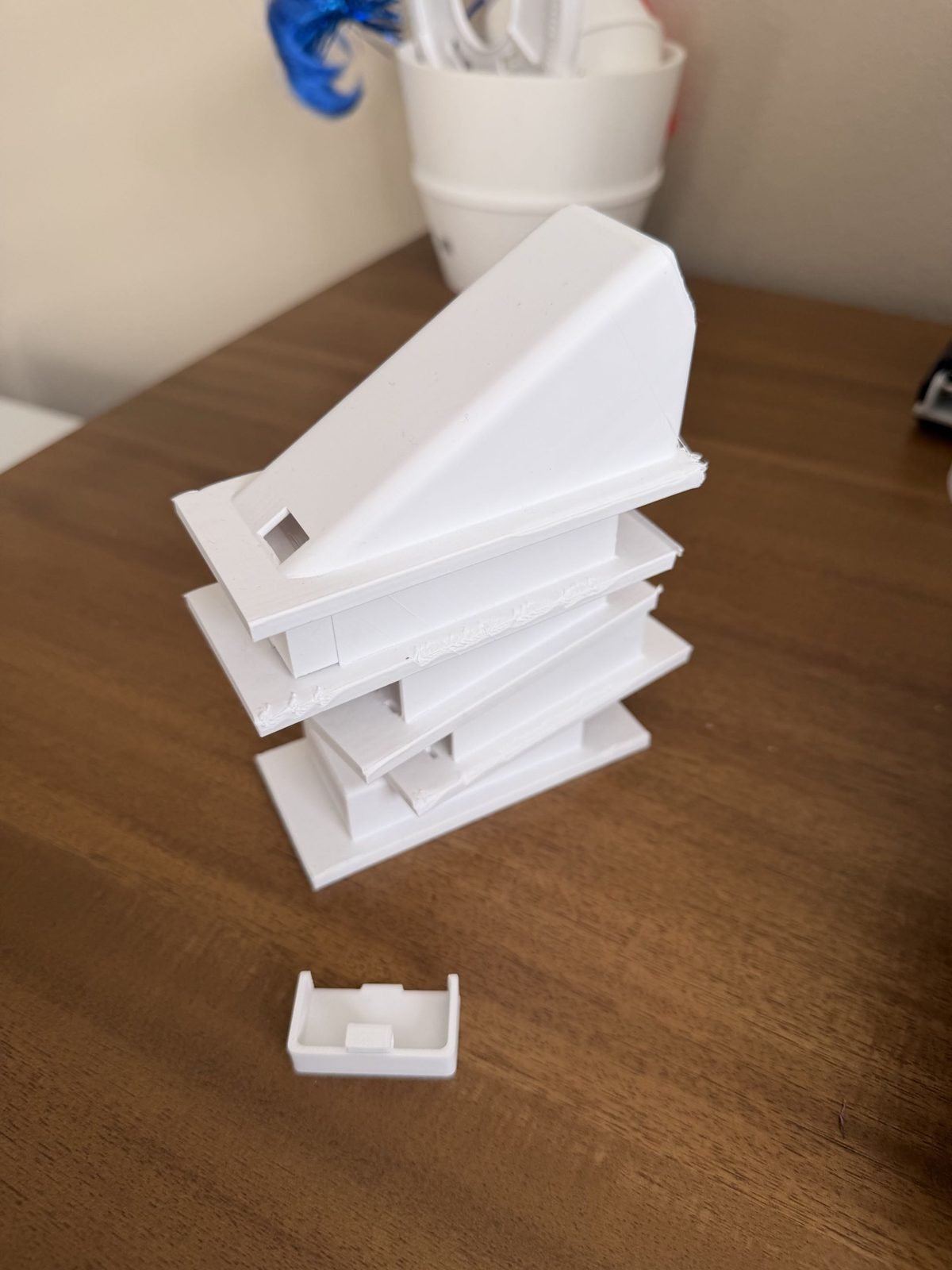
The Smart Nest is an instrumented version of the standard nest box. Rather than relying on a person to look inside and report what they see, it carries a small set of sensors that record temperature, humidity, and light every hour, on its own and without disturbing the birds.
It does not replace the project's regular monitored boxes; it complements them. Citizen-monitored nests track occupancy and fledging success; Smart Nests track the conditions inside the box itself, at the same kind of sites, so that together the two can show whether the boxes birds actually use differ measurably from the ones they pass over.
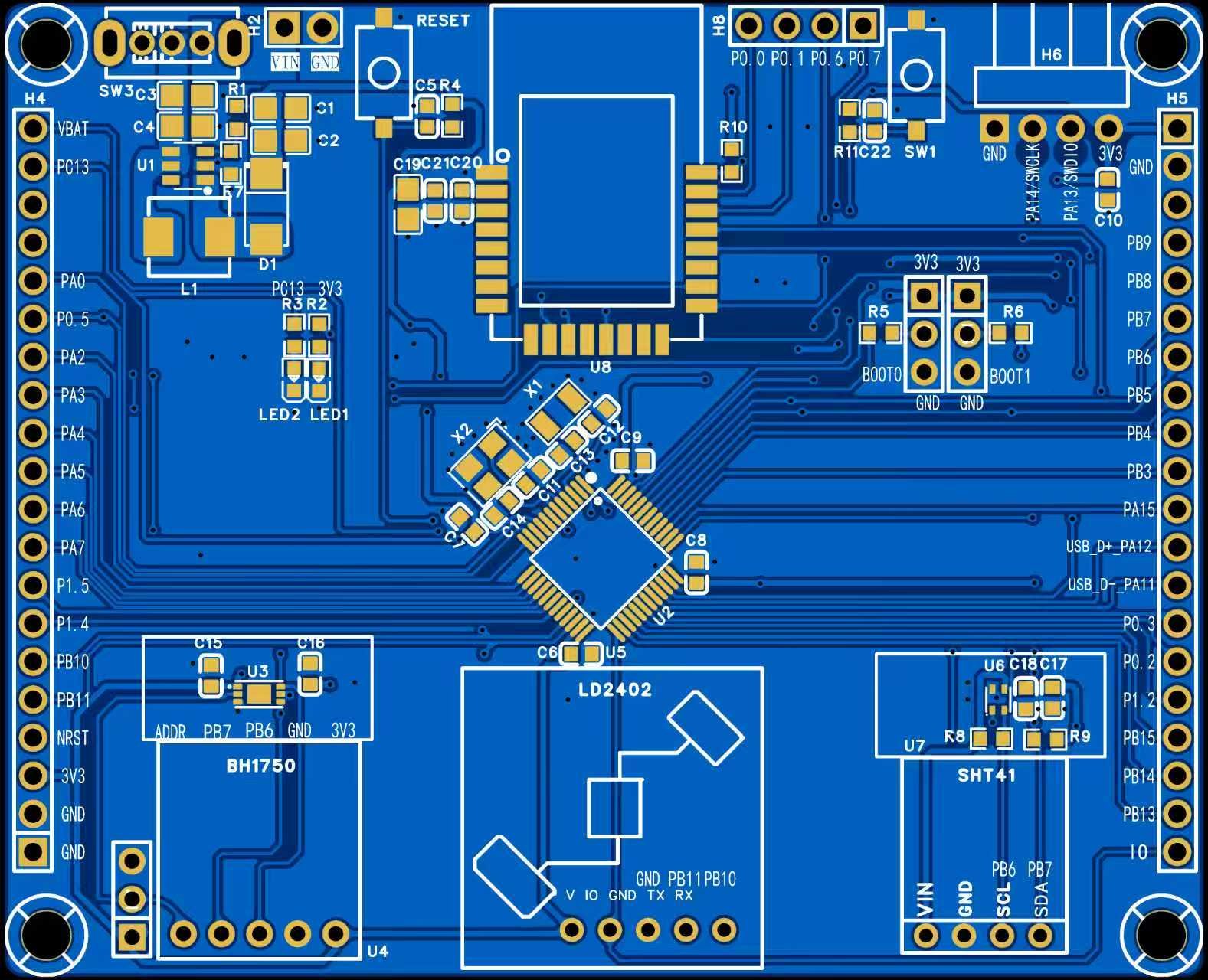
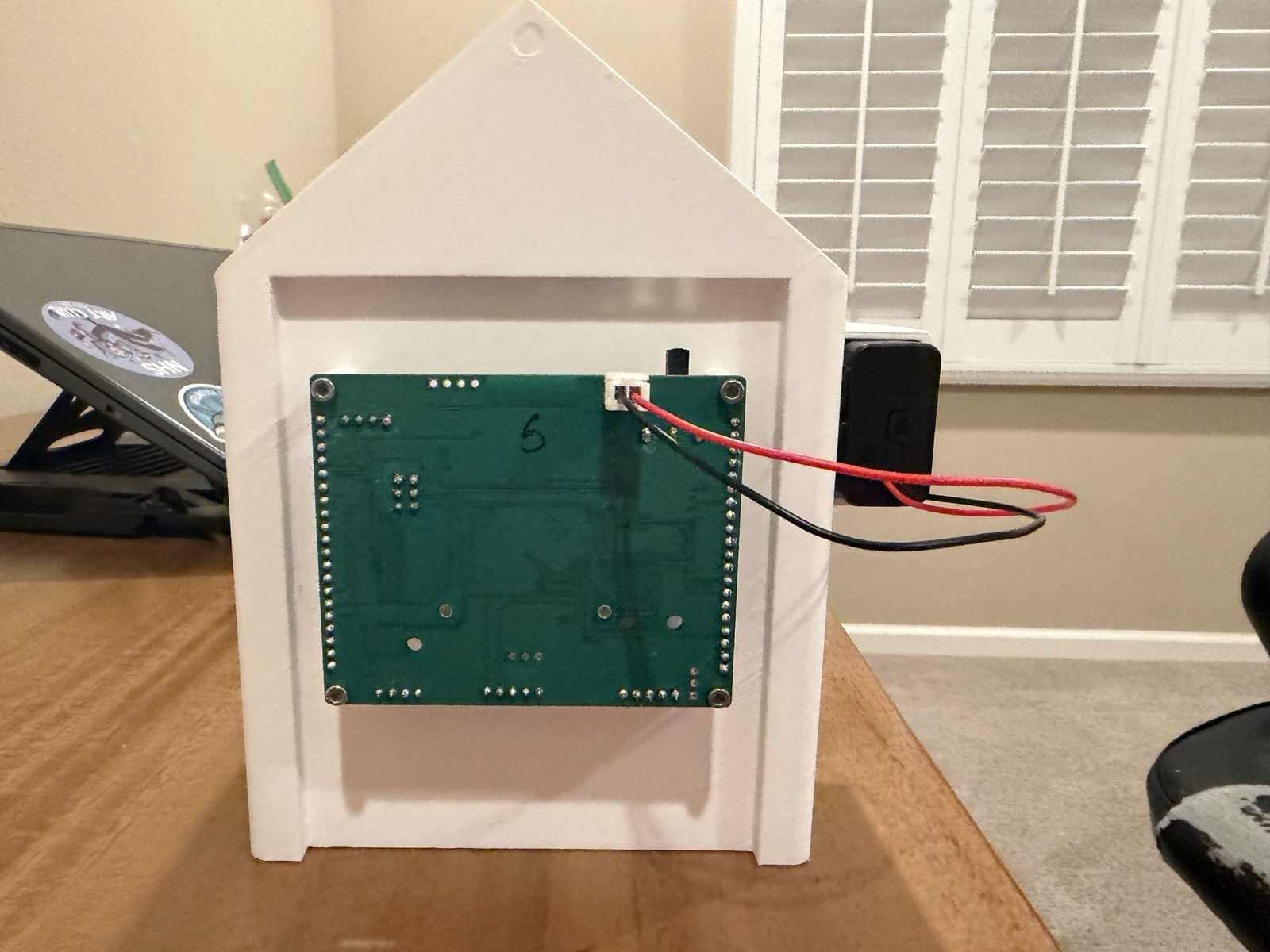
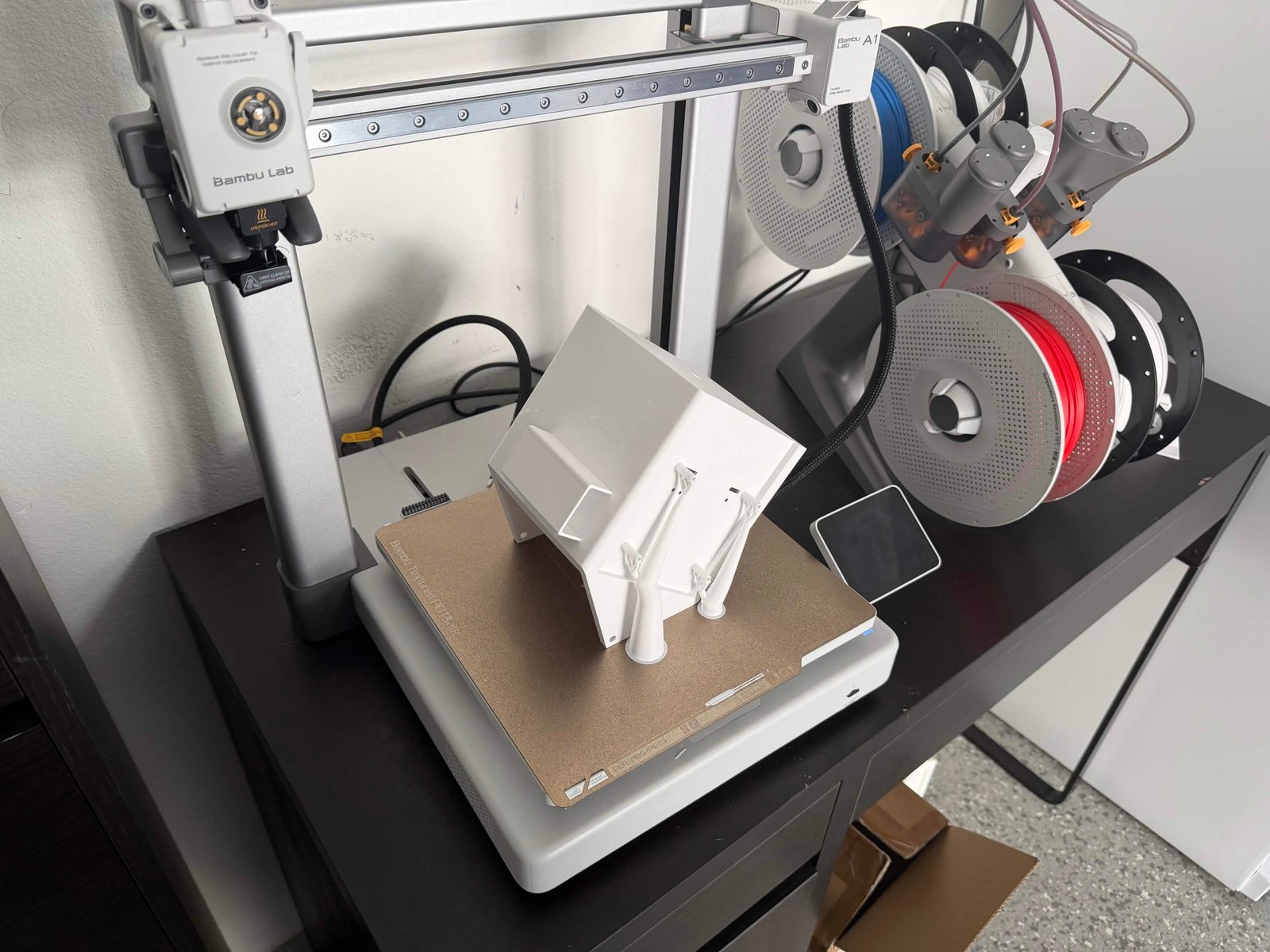
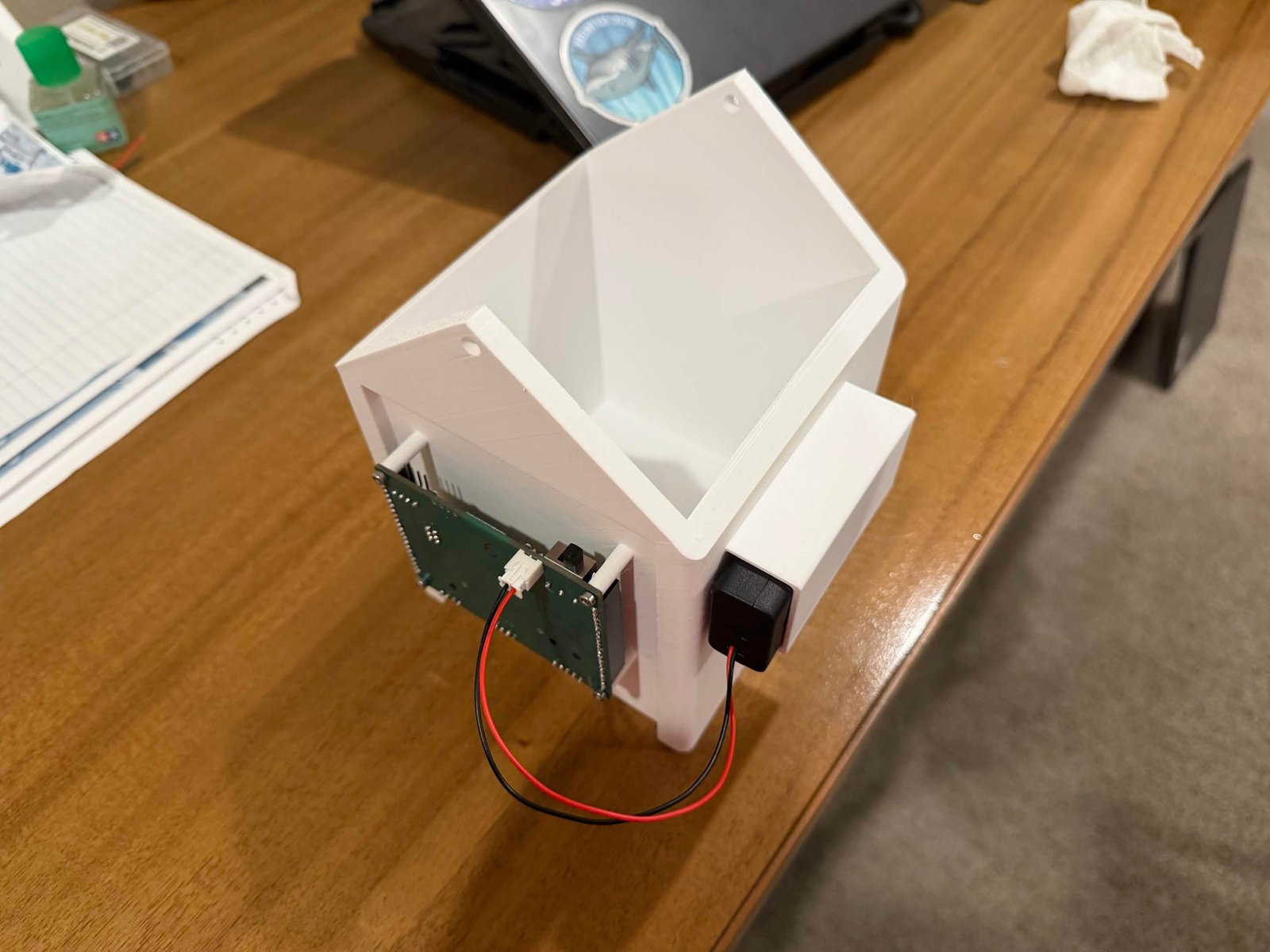
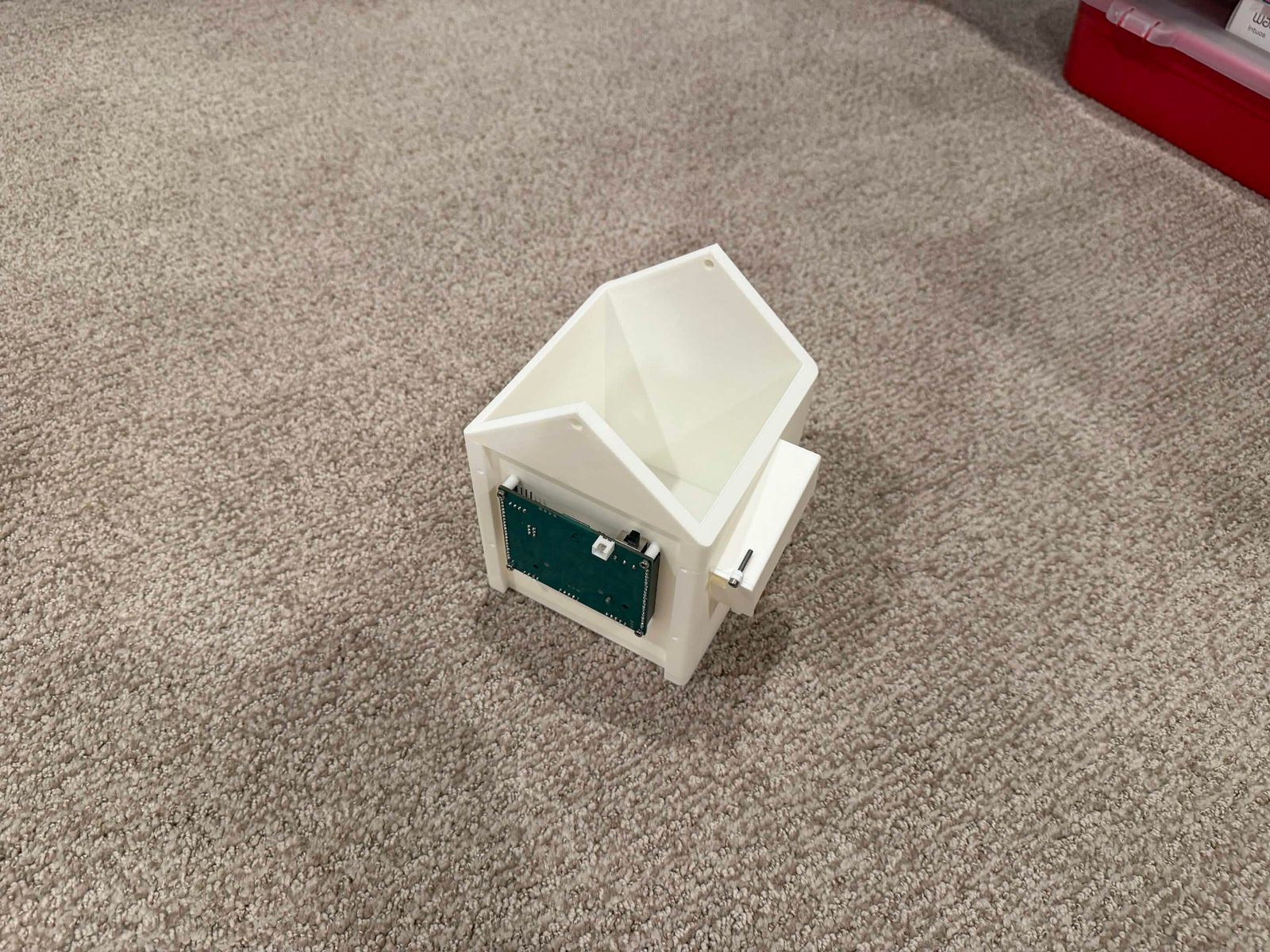
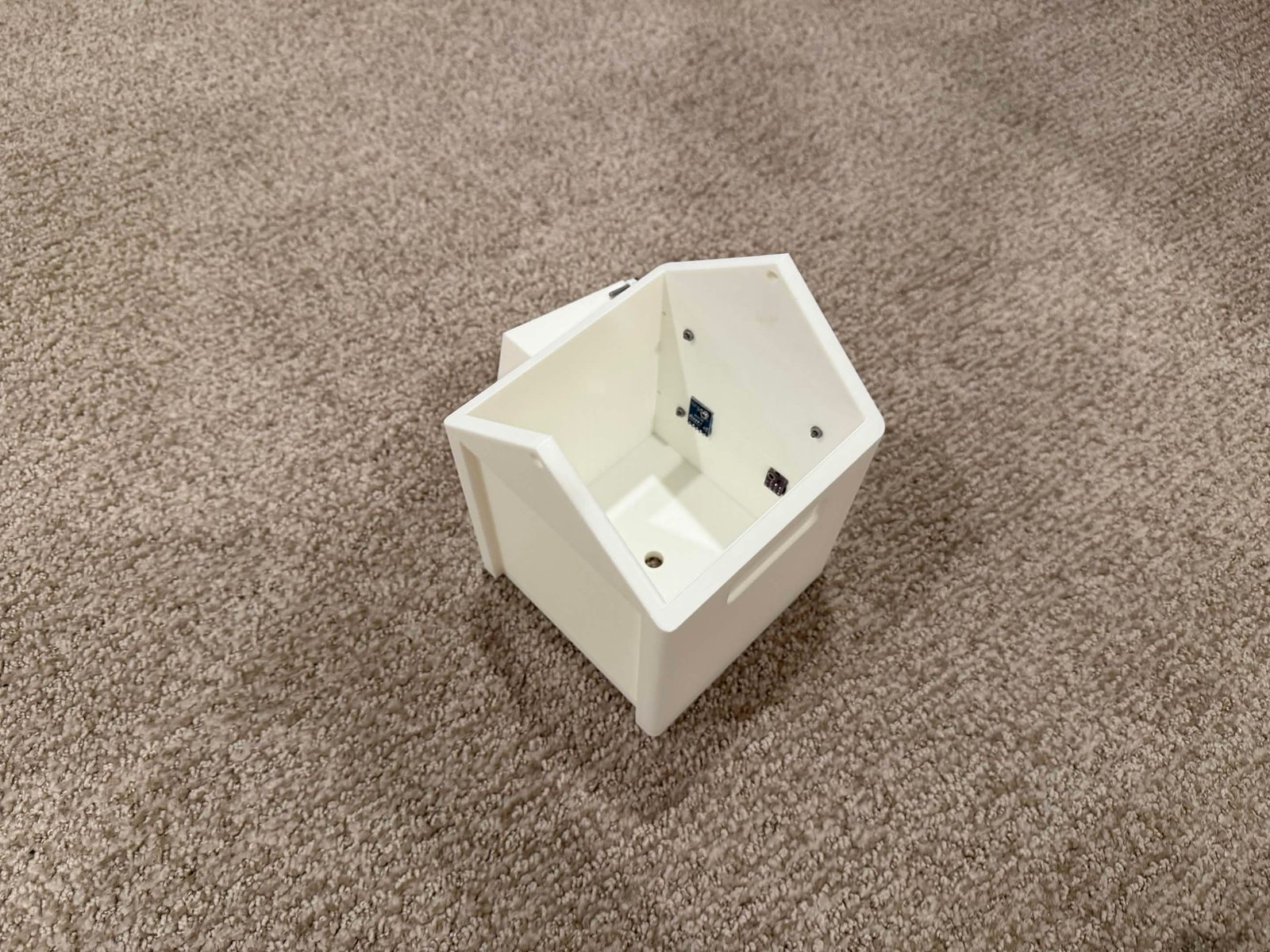
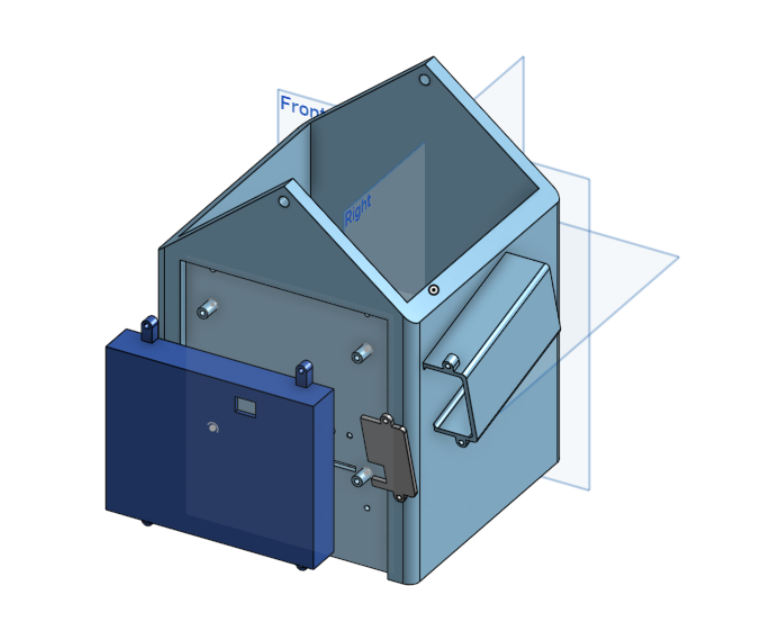
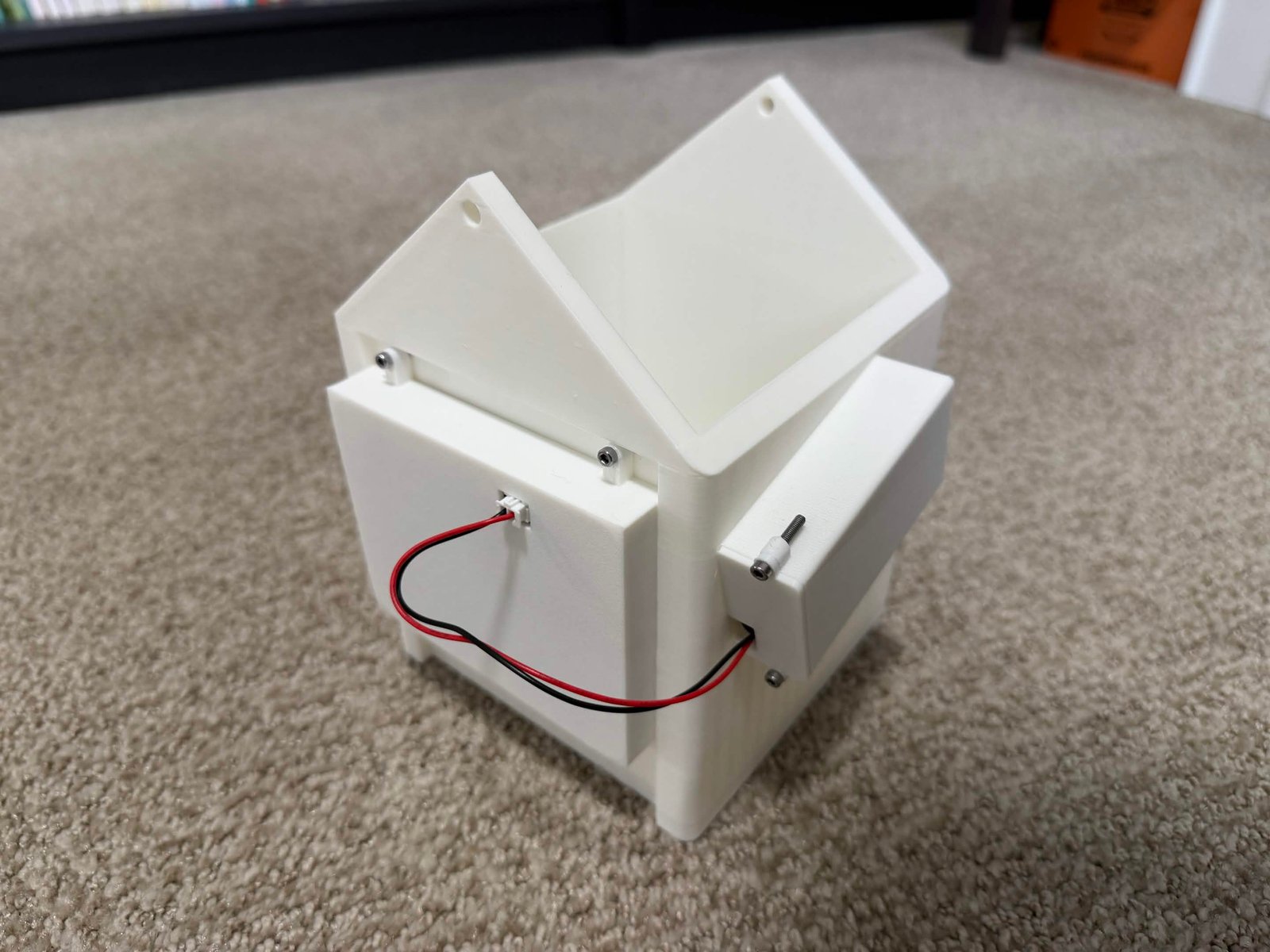
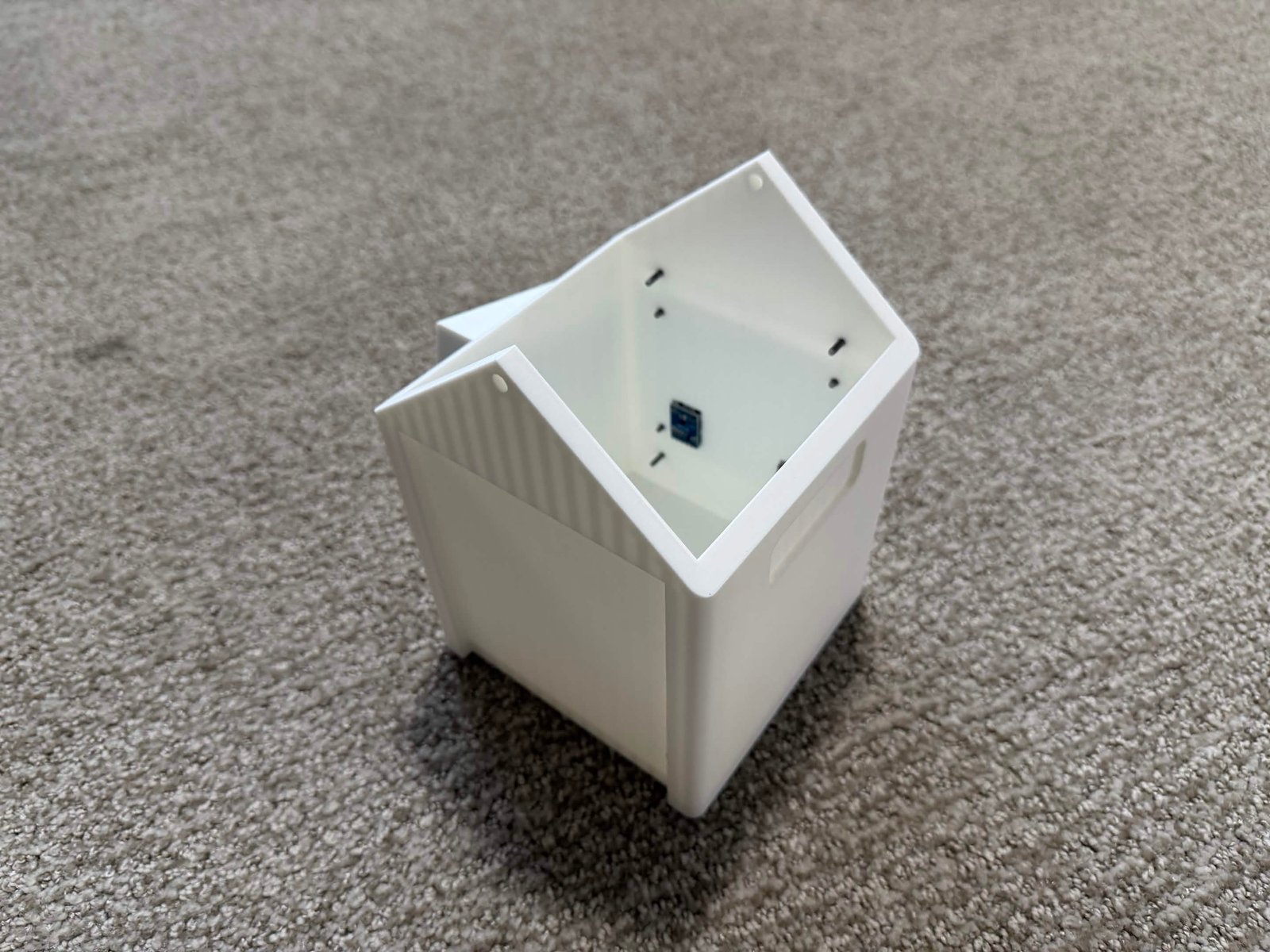
The enclosure is 3D printed, roughly the size of a small shoebox, and keeps every electronic part behind the nesting chamber rather than inside it. The control board, the battery, and both sensors sit together in a single sealed compartment, opened from the outside so that a battery change or a data visit never disturbs the nest. The chamber itself remains a plain, dark, empty space, indistinguishable from an ordinary nest box.
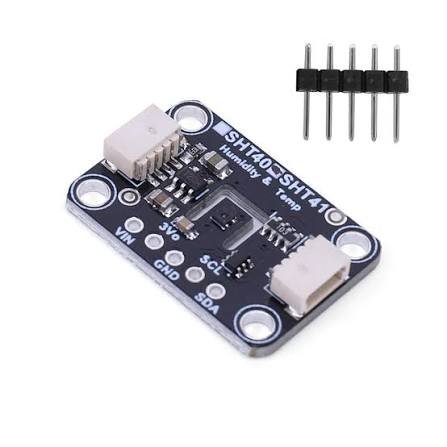
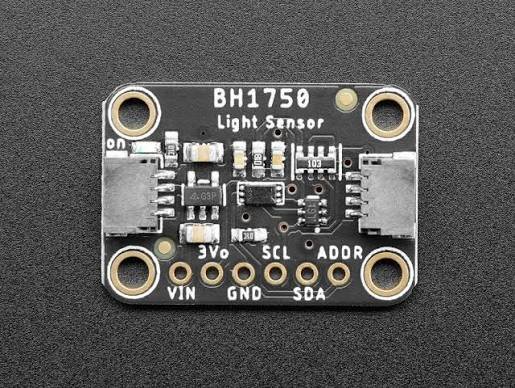
The board carries a small microcontroller and a Bluetooth radio used only to retrieve data on site; between visits the radio stays off. Two sensors handle the actual measurement, one for temperature and humidity and one for ambient light, both positioned to read the cavity's own conditions rather than the compartment around them. Readings are written to onboard memory rather than transmitted, which is what allows the battery to last for days rather than hours.
The enclosure is still at prototype stage rather than a finished design. Field testing has already shown that a sensor opening blocked even slightly can distort a reading, so keeping those openings clear, and keeping the compartment dry, level, and properly sealed, remains the main design work ahead.
Once a box has been hung and its clock set from a phone, it operates entirely on its own. Every hour it records temperature, humidity, and light and stores the reading in memory; nothing is transmitted and nothing is monitored remotely; the box simply keeps its own record until it is collected.
- Collect. A volunteer visits the site, connects to the box over Bluetooth, and downloads the stored history to a phone without opening the nesting chamber.
- Service. If the battery needs replacing, that happens during the same visit, at the sealed compartment. Because removing power clears the box's clock, the visit ends with the time being reset.
- Upload. The collected log is converted into a spreadsheet and uploaded to the site, where it joins that box's history and appears on the data dashboard.
Light is published on a 0–100 scale rather than in raw units, since cavity light can swing from near-total darkness to full sun within a single day, and a linear scale would flatten most of that range. Gaps in the record are preserved rather than filled in, and a reading with one failed sensor is still kept; the working channels are retained rather than the whole row being discarded.
Smart Nests are currently deployed across a small but deliberately varied mix of sites. Some are placed in the field, at the same monitoring locations the project's other nests occupy, which is the setting the whole design exists to serve. Others sit in back gardens, where they are easier to reach and any fault in the hardware tends to surface quickly, giving the team an early warning before the same issue turns up somewhere harder to visit.
A further set is kept indoors on purpose, in rooms with steady, well-understood conditions. These indoor units are not part of the project's biological record; instead, they serve as a baseline reading against which the field units can be judged. When a field box reports something unusual, an unexpected temperature swing or a reading that stays dark longer than expected, the indoor units make it possible to tell whether the cause is the environment or the instrument itself, a distinction that would otherwise be difficult to draw.
Three parts of the design are still in progress.
- Power. The current firmware keeps the microcontroller awake continuously, which is simple to run but costly to power: on a single battery a box presently lasts around four days. A lower-power version, built around letting the processor sleep between readings and wake on a timer, is under development and is intended to comfortably clear a full week between service visits, which is the interval the deployment model is built around.
- Enclosure. The design is likewise still at prototype stage rather than finished, with sealing, drainage, and keeping the sensor openings clear the main problems still being worked through between print runs.
- Occupancy sensing. Some units also carry an experimental radar module intended to detect whether a bird is present inside the cavity; its readings are not yet reliable and are not published, so for now the Smart Nest should be understood as an environmental logger rather than a bird detector.
Closing the power gap and settling the enclosure design are the priorities ahead of any wider expansion of the deployment.